Almost everyone says they want to stay in their home. Then something changes — a knee, a spouse's diagnosis, a winter that felt harder than the last one — and the question becomes real

Dated: July 14 2026
Views: 17
SEO Title: 2026 Home Renovation Trends in State College, PA
Meta Description: Discover the biggest 2026 home renovation trends and which improvements may help State College and Centre County homeowners increase comfort, functionality, and resale appeal.
Suggested URL: /home-renovation-trends-state-college-pa
Home renovation remains a major priority for American homeowners, but the reasons people are improving their homes are changing.
Some homeowners are renovating because they expect to remain in their homes for many years. Others are updating older finishes, improving energy efficiency or preparing their property for the real estate market.
For homeowners in State College, Bellefonte, Boalsburg, Lemont and throughout Centre County, understanding these trends can help you decide which projects deserve your time and money—and which improvements may make the biggest difference when it is time to sell.
More than half of U.S. homeowners completed a renovation project in 2025, according to the latest Houzz & Home Study. Although economic uncertainty has caused some homeowners to become more cautious, renovation activity remains historically strong.
This makes sense in a market where many homeowners have accumulated equity but may not be ready to give up their current location, mortgage or neighborhood. Instead of moving, they are finding ways to make their existing homes work better.
In Centre County, that could mean opening a kitchen to the living area, finishing a basement, creating a home office, improving outdoor living space or modifying a home for first-floor living.
Renovations are not always about resale value.
Houzz found that 61% of renovating homeowners expect to stay in their homes for at least 11 more years, while 44% consider their current property their forever home.
That longer timeline changes how homeowners approach renovations. Instead of choosing the least expensive option, many are selecting improvements that provide greater comfort, accessibility and enjoyment.
Examples may include:
Walk-in showers and more accessible bathrooms
First-floor bedrooms or laundry areas
Better storage and organization
Energy-efficient windows and mechanical systems
More functional kitchens
Covered patios, decks and outdoor gathering areas
These improvements may be especially valuable for homeowners who love their State College or Centre County location but need their home to adapt to a changing lifestyle.
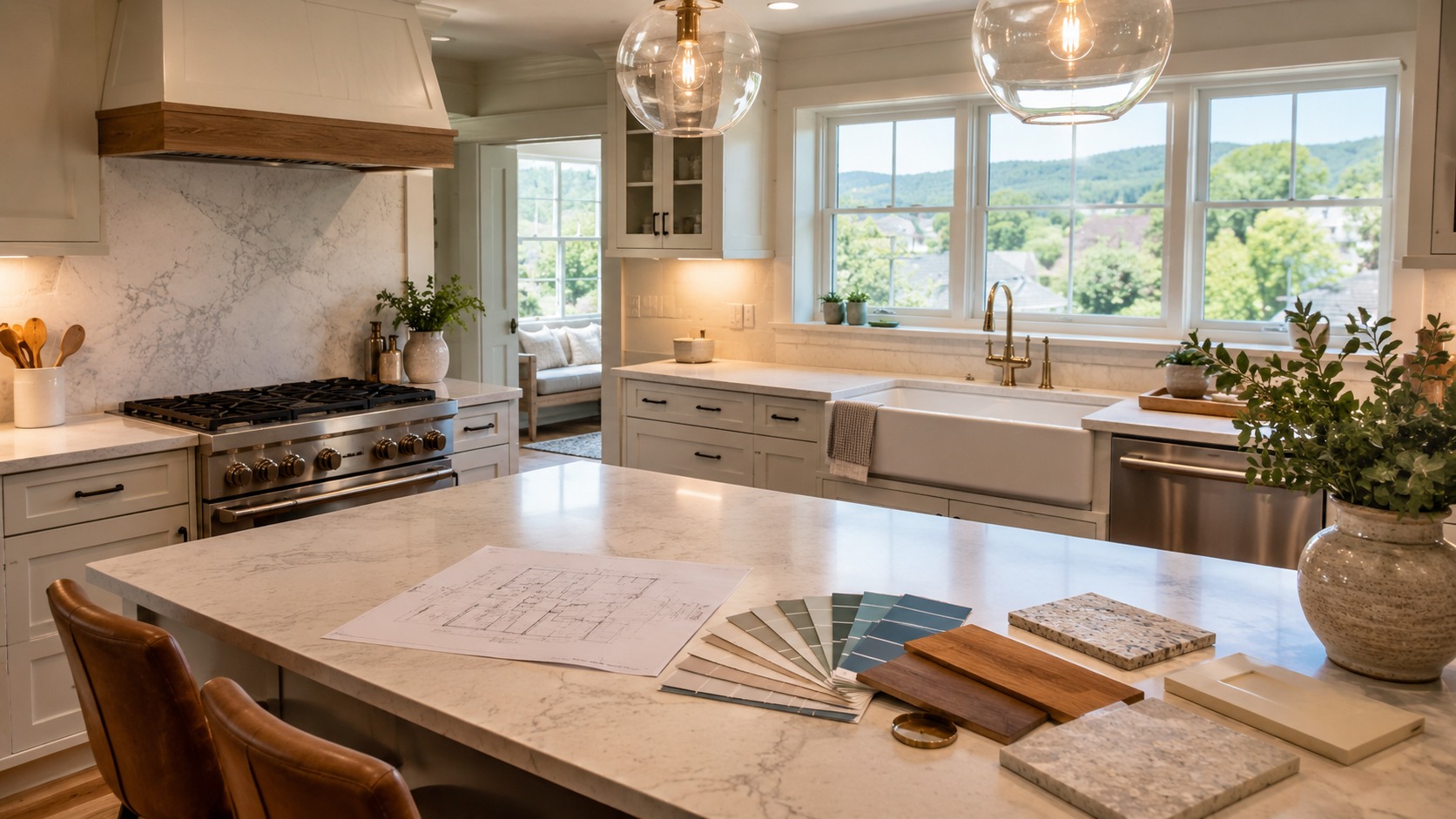
The kitchen continues to be one of the most important rooms in the home.
Kitchen projects can also require significant patience. Houzz reported that kitchen renovations averaged approximately 9.5 months of planning before construction even began. Construction then lasted an average of 5.8 months.
That does not mean every kitchen renovation will take more than a year. It does show why homeowners should begin planning early, particularly when a project involves custom cabinets, structural changes, plumbing, electrical work or special-order materials.
A successful kitchen renovation does not always require removing walls or replacing everything. Strategic changes such as updated lighting, modern hardware, new countertops, fresh paint or refinished cabinets can make a major visual difference.
Not every renovation needs to cost tens of thousands of dollars.
Painting was the most common home improvement purchase among renovators, with 62% buying paint. Other popular purchases included light fixtures, faucets and showerheads, lawn and garden supplies, and building materials.
These improvements can be particularly effective when preparing a Centre County home for sale.
Fresh, neutral paint can make rooms feel cleaner and brighter. Updated light fixtures can modernize an older interior. New faucets, cabinet hardware and bathroom mirrors can create a more current appearance without requiring a full renovation.
For sellers, these visible improvements may create a stronger first impression in listing photos and during showings.
One of the biggest renovation challenges is staying on budget.
More than one-third of renovating homeowners exceeded their original budget. Unexpected material or service costs were the most frequently reported reason, but homeowners also spent more when they upgraded materials or expanded the project after work began. Approximately one-quarter of renovators did not establish a budget before starting.
A realistic renovation budget should include a reserve for surprises, particularly in older properties.
Once walls or floors are opened, contractors may discover outdated wiring, plumbing concerns, moisture damage, structural issues or previous repairs that were not completed correctly.
Building a contingency into the budget can help prevent an unexpected discovery from stopping the entire project.
Most homeowners continue to use savings to pay for renovations. However, credit card use has increased, and some homeowners are using home equity lines, home equity loans or cash-out refinancing for larger projects.
Before financing a project, homeowners should consider both the potential benefit and the total borrowing cost.
A renovation that improves safety, corrects an active problem or makes the home more functional may be worth financing. A highly personalized cosmetic project may be harder to justify if the homeowner expects to sell soon.
Speaking with a qualified lender or financial professional can help homeowners understand the available options and how the additional payment may affect their finances.
Despite the popularity of online renovation videos and do-it-yourself content, most homeowners still rely on professional help.
Houzz reported that 91% of renovating homeowners hired at least one professional. Nearly half also hired specialty providers such as electricians, HVAC contractors and plumbers.
The right professional can help with more than installation. Experienced contractors can identify potential problems, establish a realistic timeline, coordinate subcontractors and help homeowners understand where spending more—or less—makes sense.
Homeowners should verify insurance, licensing requirements, references, written estimates and the exact scope of work before signing a contract.
Homeowner satisfaction and financial return are not always the same.
The National Association of Realtors’ 2025 Remodeling Impact Report found that adding a primary bedroom suite, completing a kitchen upgrade and installing a new roof received the highest homeowner satisfaction scores.
However, the projects with the strongest estimated cost recovery included a new steel front door, a closet renovation and a fiberglass front door.
This distinction matters.
A beautiful primary suite may substantially improve your daily life, but it may not return every dollar spent when the home sells. Meanwhile, a relatively simple exterior improvement could provide a stronger percentage return by improving curb appeal.
The right choice depends on your goal:
Renovating to stay: Prioritize comfort, functionality and personal enjoyment.
Renovating to sell: Prioritize condition, cleanliness, broad buyer appeal and visible maintenance.
Even when buyers plan to make their own changes, many still prefer homes that appear clean, maintained and move-in ready.
A dated kitchen may not prevent a sale if the home is priced correctly. However, signs of deferred maintenance can make buyers concerned about what else may need attention.
Before investing in decorative upgrades, homeowners should consider addressing:
Active water intrusion
Roof or gutter concerns
Heating and cooling issues
Electrical or plumbing problems
Damaged flooring or drywall
Peeling exterior paint
Broken windows or doors
Safety and accessibility concerns
Correcting these issues may not produce the most dramatic before-and-after photos, but it can create greater buyer confidence.
A renovation should make sense for the home, neighborhood and likely buyer.
The same project may have a different impact in downtown State College than it would in Lemont, Boalsburg, Bellefonte or a rural part of Centre County. Home size, school district, lot, price range and competing inventory can all influence how buyers respond to an improvement.
Before completing a major project for resale, it can be helpful to compare your home with recently sold and currently listed properties.
You may discover that buyers in your price range expect an updated kitchen. You may also discover that a full renovation would push your investment beyond what the local market is likely to support.
There is no universal answer.
Some homes benefit from painting, flooring, lighting and landscaping before going on the market. Other properties may be better positioned with minimal work and a price that allows the buyer to complete the renovation.
Before spending thousands of dollars, consider:
How soon you expect to sell.
Whether the improvement corrects a problem or is primarily cosmetic.
What competing homes offer.
Whether buyers will value the improvement.
Whether the project could delay your listing.
How much of the investment you are likely to recover.
A pre-listing consultation can help you prioritize the projects that may have the greatest impact while avoiding improvements that are unlikely to change your final selling price.
Renovations can improve your quality of life, protect your property and help your home stand out when it is time to sell. The key is understanding the purpose of the project before work begins.
Are you renovating for your family, preparing for long-term living or trying to attract today’s buyers?
Once that goal is clear, it becomes much easier to establish a realistic budget and choose improvements that make sense for your home.
If you are considering selling a home in State College, Bellefonte, Boalsburg, Lemont or elsewhere in Centre County, I would be happy to help you determine which updates may be worthwhile before you list—and which ones you may be able to skip.
Phil Williams, Realtor®
RE/MAX Centre Realty
814-571-9572
www.centreparealtor.com

I’m Phil Williams, a Realtor® with RE/MAX Centre Realty serving State College, Bellefonte, Centre Hall, Boalsburg, Port Matilda, and communities throughout Centre County. As a State College native....
Almost everyone says they want to stay in their home. Then something changes — a knee, a spouse's diagnosis, a winter that felt harder than the last one — and the question becomes real
The pitch sounds great, and sometimes it is. Buy a condo near campus. Use it for home games and family visits. Rent it the rest of the year. Your grandkids have somewhere to stay when they're
"I want something maintenance-free" means four completely different things depending on who says it, and the four options have very different costs, rules, and exit strategies.Let me sort them out,
There's a specific kind of listing appointment I've learned to slow down for. The owner has been in the house since the eighties. Their kids grew up in it. They're not sure they want to sell, and
 © BRIGHT, All Rights Reserved
Information Deemed Reliable But Not Guaranteed
The data relating to real estate for sale on this website appears in part through the BRIGHT Internet Data Exchange program, a voluntary cooperative exchange of
property listing data between licensed real estate brokerage firms in which
participates, and is provided by BRIGHT through a licensing agreement.
The information provided by this website is for the personal,
non-commercial use of consumers and may not be used for any purpose other than to identify prospective properties consumers may be interested in purchasing.
Data last updated: September 16, 2026 4:15 PM UTC
Some properties which appear for sale on this website may no longer be available
because they are under contract, have Closed or are no longer being offered for sale.
Some real estate firms do not participate in IDX and their listings do not appear on this website. Some properties listed with participating firms do not appear on this website at the request of the seller.
Show More...
